Why Your North Texas Foundation Is Moving (And How to Stop It)
You see the crack in the drywall above the bedroom door. You feel the front door stick when the humidity drops. In North Texas, these aren't just house quirks. They are signs of the ground shifting beneath your boots.
Most people blame the builder. Usually, the culprit is the chemistry of the dirt.
The Science of Expansive Clay
The soil in our region is primarily high-plasticity clay. From an engineering perspective, we look at the Plasticity Index (PI). This number tells us how much the soil volume changes with moisture. Our local clay has a high PI. It acts like a sponge.
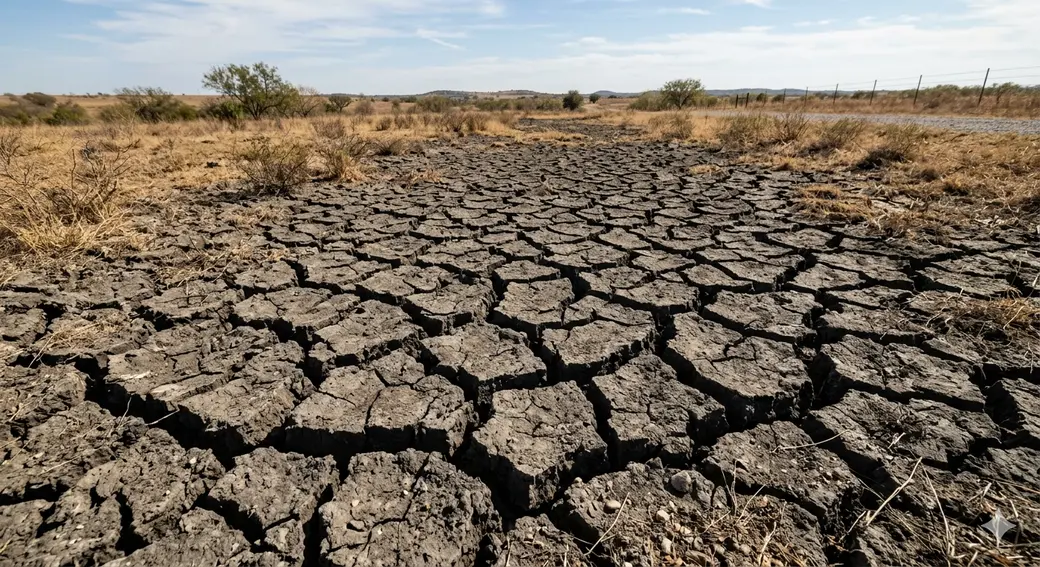
When it rains, the clay particles absorb water and expand. When the Texas sun bakes the ground in July, that water evaporates. The soil shrinks. It leaves gaps under your concrete slab.
So, your house isn't just sitting there. It is rising and falling on a geological tide.
Why the "Drought-to-Deluge" Cycle is Dangerous
Stability requires consistency. Texas weather is rarely consistent.
-
The Shrink: In a dry spell, the soil pulls away from the foundation. This removes the lateral support the slab needs.
-
The Swell: A sudden heavy rain fills those gaps instantly. The soil expands with immense pressure.
And if your gutters dump water right at the corner of the house, that specific spot swells faster than the rest. That differential movement is what snaps a slab or cracks a brick facade.
Three Practical Steps to Protect Your Investment
You can't change the geology of your lot. You can manage the moisture.
-
Maintain Consistent Moisture: Use a soaker hose system. Place it 12 to 18 inches from the foundation. You aren't trying to grow a garden. You are trying to keep the clay from pulling away.
-
Manage Your Drainage: Water is the enemy of a stable foundation. Ensure your lot is graded so water flows away from the structure. Clean your gutters. Use downspout extensions.
-
Watch Your Trees: A mature oak tree can drink hundreds of gallons of water a day. If it’s too close to the house, it will suck the moisture out from under your foundation faster than a soaker hose can replace it.
The Bottom Line
Buying a home in North Texas means managing the land it sits on. High-plasticity clay is a reality of the local landscape. It requires a proactive maintenance schedule.
So, check your perimeter monthly. Look for soil separation. Ensure your drainage paths are clear. And if you are buying a new property, always ask for the soil report or a foundation inspection. The data doesn't lie.
Categories
Recent Posts